Showing posts with label South Asian. Show all posts

Friday, June 5, 2015

Sabyasachi Collections showcased at ‘Ramp it up for Raksha’

By Neha Negandhi
May 2015

This article was originally published in Khabar in May 2015

Sabyasachi Collections showcased at ‘Ramp it up for Raksha’
(Photos: Niraj Sharma)
Combine fun and fashion, spice it with a worthy charity and you’ve got a designer saree showcase benefiting the nonprofit organization, Raksha. Barkha Jayaswal, owner of Bollywood Closet boutique, Sumeta Satija, choreographer/creative director, and Pooja Kapoor Badlani, jewelry designer for Elegante, joined forces for an afternoon fashion-focused fundraiser on March 28. “Ramp it Up for Raksha” showcased stunning Sabyasachi Mukherjee sarees and lehengas with part of the proceeds benefiting Raksha, a volunteer-driven organization empowering Georgia’s South Asian community.
Bollywood elegance radiated from the moment you approached the Country Club of the South’s residence of Anil and Salila Sharma who hosted the afternoon soiree. Two tuxedoed teens greeted guests as they entered the charming home with vaulted ceilings and floor-to-ceiling windows. DJ Sam provided music while guests nibbled on food platters ranging from Manchurian samosas to South Indian pakoras. But it was when the center spotlight beamed on the arched entryway, new music beats began to strum, and the 60-person full capacity living room stilled that the real show began.
Raksha_fr above_0478-320.jpg
05_15_AT-RampUpRaksha_Aparna.jpg
"Amazing and dedicated young men volunteering for Raksha."Aparna Bhattacharyya, Raksha’s Director, was the first model to walk the ramp.
Rakhsa volunteers welcomed guests and spoke about the power of youth volunteers and the importance of engaging teenagers in dialogue regarding taboo subjects. Aparna Bhattacharyya, Raksha’s Director, was the first model to walk the ramp and she thanked the sponsors, volunteers, and marked Raksha’s 20th year anniversary celebrations in 2015. Music was beautifully choreographed to Satija’s creative direction as each model made a dramatic entrance—some on the upper floor overlooking the guests below and some at audience level. Each striding to the beat, stopping at the exact moment the music insisted, and telling an exquisite story with each show-stopping saree. The Sabyasachi Mukherjee saree and lehenga collection was quite simply exquisite. The silks and organza fabrics with finest embroidery were draped to perfection on the models in a candle-lit backdrop. Make up and hair by fashion blogger Shreya Kadu added to the look. Audience members went wild as each model took center stage; clapping, whistling, celebrating each other as well as the designer who masterfully defined his design motto, “personalized imperfection of the human hand.”
05_15_AT-RampUpRaksha_GoldSaree-sitting.jpg
05_15_AT-RampUpRaksha_Blk-dress.jpg
Later, it was in the crowded basement converted to a sales room that the women’s voices (and checkbooks) took center stage. Bollywood Closet’s Barkha Jayaswal, who grew up with designer Mukherjee, couldn’t wait to partner with Raksha for an event. “Raksha does such important work for the community. I wanted a way to not only support what Raksha does but also celebrate women and bring everyone together for fun and fashion.” All the models walked around, showcasing their haute couture sarees and guests were encouraged to try the designer pieces on for themselves. Pieces were bought quickly off the models as well as the racks lining the walls and at the jewelry table covered in velour; Badlani reigned supreme insisting guests model hoop pearl earrings, granite-pendant necklaces and other intricate pieces. Conviviality filled the air, couture glamour overflowed and for those who helped fill their closet, they also helped fulfill a community member’s need to feel empowered. And that will always be in fashion.
05_15_AT-RampUpRaksha_natural.jpg
05_15_AT-RampUpRaksha_Razdan.jpg

Raksha_folk_0666-320.jpg

Friday, April 3, 2015

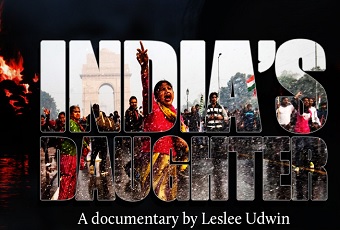
Banning “India’s Daughter” is insulting and embarrassing

This article was originally written and published in NRI Pulse in April 2015. 

Banning “India’s Daughter” is Insulting and Embarrassing

BY NEHA NEGANDHI
It is as it always has been in India: men are superior, women don’t belong in society. There was not shock or surprise when I saw the BBC documentary, “India’s Daughter” on YouTube; instead I had a meteoric rising of rage only to descend into a deep depression. Watching the harrowing images and interviews, it only reiterated how India’s unwavering patriarchal society has created conditions ripe for that heinous crime in Delhi and the abusive mentality that still continues to flourish today.
British filmmaker Leslie Udwin painstakingly details the gang-rape and murder of a 23-year-old medical student, Jyoti Singh who was on a private bus home after watching a movie with a male friend. It narrates her faithful and devoted parents who cashed in their “ancestral land” to pay for her schooling while juxtaposing images of public protests ignited after Jyoti’s rape. At the center of the film is the crux ofIndia’s shame: the jailhouse interview with the bus driver who was convicted of the rape and murder and is currently sentenced to die. He says unaffectedly, “A decent girl won’t roam around at nine o’clock at night” and. “A girl is far more responsible for rape than a boy.” The rapist, Mukesh Singh, echoes what India’s masculine mirror has curated for centuries: women are to blame for any blatant abuse and violence against them.
These convicted rapists learn what other men in society inadvertently teach them. Hundreds of millions of Indian men are taught that if a woman dresses immodestly, if she chooses to go out after 9 pm, if she wants to go to bars/clubs then she is asking to be raped. Some of these teachings could be symptoms of little to no education and/or growing up poor and deprived but mostly it is learning the widespread belief that women are subservient and they [are only good for] as Singh says, “housework and housekeeping.” What is inexcusable are the well educated leaders who fully embody this repugnant thinking such as the lawyers of the six convicted rapists and murderers, M.L. Sharma and A.P. Singh.  In extensive film interviews, Sharma says, “We have the best culture. In our culture, there is no place for a woman.” Even more shocking is when defense lawyer Singh says, “If my daughter or sister disgraced herself, I would take this sister or daughter to my farmhouse, and in front of my entire family, I would put petrol on her and set her alight.”  If these men, who are proficient in the letter of the law that gives women equal rights inIndia, are projecting these regressive thoughts, what are the others to learn?
In sure-fire response to the furious riots after Jyoti Singh’s murder, the government passed laws to protect and serve the security of women. Mostly though, these have been knee-jerk reactions and lip service to gloss over the real truth which is implementing these new laws and security measures. But where does legal change begin when newborn girls are subjected to female infanticide at rates that are still alarmingly high; when discrimination even for nutrition is taught at the dinner table, as discussed in the film, a boy is given more milk than his sister because he needs more energy; and a woman’s choice is only good when the man chooses for her? How does change begin when the enforcers of law and the society in general does not collectively stand up against discrimination and violence against women?
The Indian government has banned the film from public view stating it is perpetuating violence against women and creating a “white-savior” notion amongst international audiences. It has gone on to demand that all copies of the film be permanently removed and Google (who owns YouTube) has complied. (I was able to watch the film before YouTube was forced to remove it.) I happened to be in India visiting when the new government was elected. The tangible feelings of hope and change permeated the air. But sadly, things have quickly resumed to the way they have always been: censorship and ignorance. It is not unusual for a newly-elected leader to showcase his shiny government or to sweep injustices under the proverbial rug. The reality is,India’s government wants to salvage its international image and any undesirable news or story is dubbed “international conspiracy to defame India” and is irrevocably and immediately immobilized. The real question is how to apply this same swift and sure justice to the societal depravity and disease that permeates its society.
I am an Indian Daughter. I am proud to be labeled this but in doing so, I realize the prejudices and contradictions it comes with. In a land where female deities are venerated equally as much as their male counterparts and its largest democracy elected its first female Prime Minister in 1966, women are still treated as second class citizens by a majority of the population. These prejudices and contradictions can only be resolved through education. To ban “India’s Daughter” is like sticking our head in the sand and pretending that gender inequality does not exist. Instead, we should make sure that every man and woman watches it, because in doing so we promote a dialogue that banishes ignorance and encourages a soul-searching look at the underlying cultural gender inequalities. Or should we “just be silent and allow the rape”?

BAPS Women’s Conference empowers through faith and education

This article was originally written and published by Khabar magazine. To view original article. click here. 

BAPS Women’s Conference empowers through faith and education

By Neha Negandhi
April 2015

On March 15, 2015 the bright sun outside reflected the mood inside the hall at the eighth annual BAPS Women’s Conference in Atlanta. Beaming with positivity and welcoming smiles, the 650+ women attendees were ready to connect with the 2015 conference theme, Moving Forward. This year’s conference added a new twist with a networking mixer that promoted attendee interaction, and exhibition activity centers that combined learning while promoting the three main conference pillars: compassion, forgiveness, and perseverance.

As the sun gleamed on the 13-dome white marble mandir, the largest BAPS location in North America, the hall reflected its guru’s altruistic spirit which spread from one attendee to the next. Not one person could point to the official conference organizer; rather, people gave varying responses of teams, volunteers, and humble leaders. This quiet sentiment summarized the all-day conference programming: moving forward while ridding oneself of life’s excess baggage. To be successful on this journey, one must learn compassion, teach through forgiveness, and exemplify perseverance. Though she herself wouldn’t admit to being the unofficial chair, Rimisha Patel was definitely the go-to person and has been helping with the conference for the past six of its eight years. She says the conference is a tool to “empower women” and gives women a “safe environment to listen” and be heard. 
This year’s speakers highlighted empowering women in today’s society by building a strong cultural identity platform to stand on and also to remove excess “stuff” that hinders spiritual growth. They shared personal stories while giving lessons on each of the three pillars. The well-spoken emcee, Ashini Parikh, who recently worked as VP of Global Marketing for Edelman in Los Angeles, did an engrossing job of weaving the stories together with the theme. The lighting of the diya was followed by Payal Patel’s soliloquy: strengthening our compassion muscle is a “cure all” good for everyone, taking us out of the “me-first world” but also releasing the brain’s feel-good chemical, oxytocin for ourselves as well as “making the world a happier, welcoming place.” Patel, who holds a JD from Roger Williams University and is Assistant VP and Division Director at Robert Half Legal firm, shared stories about how her guru’s compassionate gestures is one of her foundations and urged everyone in the audience to live in an “us-world” and incorporate “kindness and gratitude in everyday life.”
Manshi Patel shared how her recent marriage taught her how to conquer her anger at out of control circumstances. “Through faith and looking deeply within myself, I found how to forgive and move forward with humility and empathy,” Manshi said.
Dr. Jayshree Patel, Pharm.D., delved deep with her personal anecdote: “Every single one of us has persevered; it is a fundamental part of being human.” She compared how Rosa Parks, Gandhi, and even Kasturba Gandhi (Gandhi’s wife) struggled mightily; her own perseverance “is not a mighty battle—it is the ongoing struggle of everyday life.”
04_15_AT-Slide-1.jpg


Keynote Speaker, Dr. Nazeera Dawood speaks on perseverance, compassion, and forgiveness.

Keynote speaker Dr. Nazeera Dawood, Health Promotion Division Director at Fulton County Department of Health and Awareness, told her heartfelt story to a captivated audience. Her perseverance in becoming a doctor against cultural norms, showing compassion for her patients, and forgiving those that did harm to her serves as a bona fide example of the three pillars. 
BAPSatlanta_mahila_wc_2015_06_450.jpg

In the packed auditorium were women of all ages. What is significant is how the learning and then living of the three mainstay pillars proves true across every age range, from child to elderly. When I asked why UGA college student Katha Patel comes every weekend to meet nine other fellow students at BAPS for servitude and fellowship, she said matter-of-factly, “this is how I connect with my community, this is where I get back to my culture, and this contributes to who I am.” If Katha is an example of living and learning then this conference is a sure success.
BAPSatlanta_mahila_wc_2015_05_680.jpg
Dancer Mrs. Mital Patel a software engineer, completed a deeply moving abstract dance on the concepts of compassion and perseverance through Kathak.